

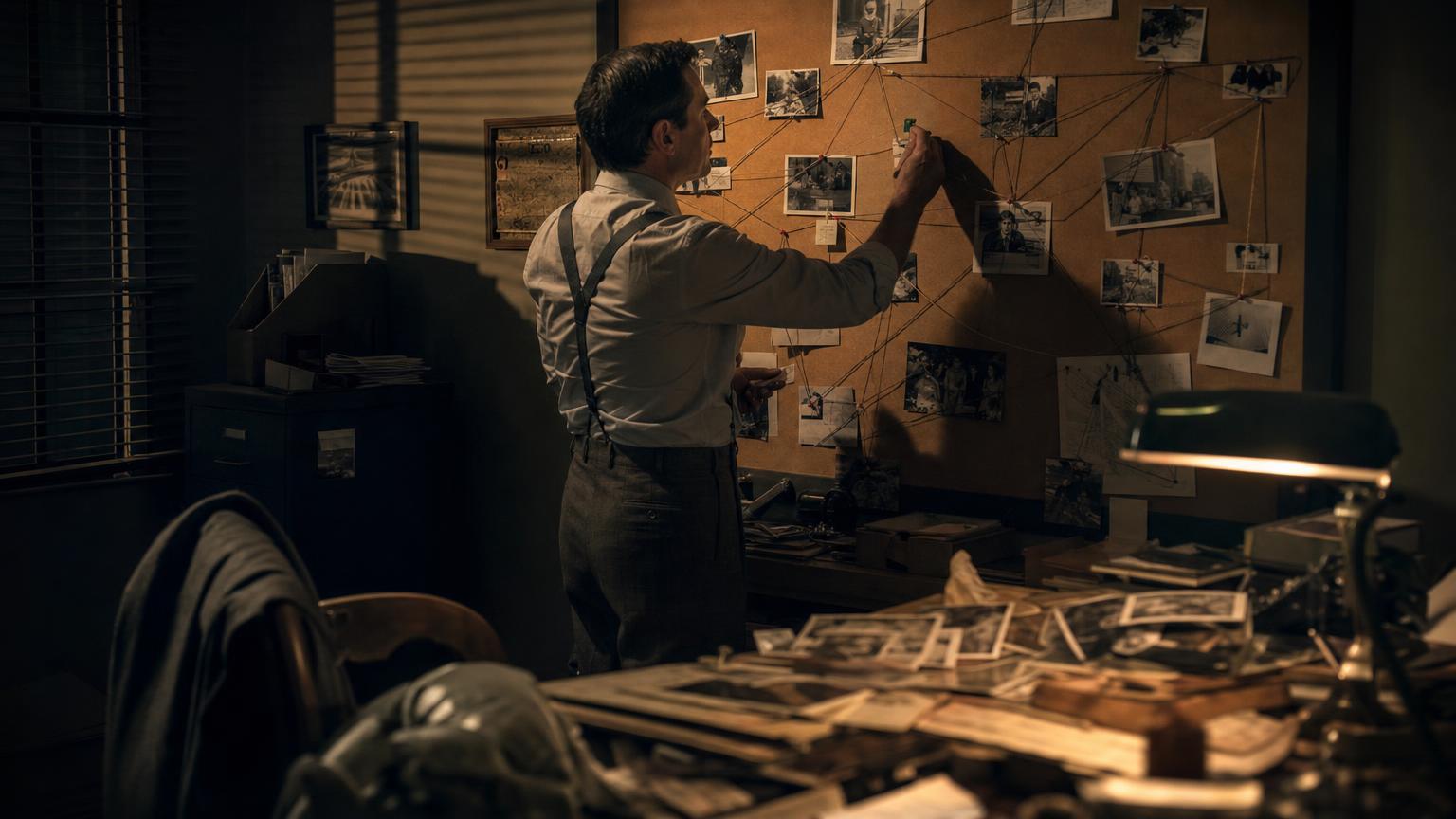
You've read the book. The detective gathers everyone in the drawing room, and the killer is... the housekeeper's twin sister, who was never mentioned until page 340. You feel cheated, not delighted. That's the difference between a mystery that plays fair and one that doesn't, and it's the whole game if you're figuring out how to write a mystery that actually satisfies.
Fair play isn't a quaint rule from old detective novels. It's the mechanism that makes the genre work at all.
What "Fair Play" Actually Means
A fair-play mystery gives the reader every piece of information the detective has, in time to solve the case themselves. Not an easy case — a solvable one. The clues are there. The reader might miss them, might get distracted by a good red herring, might not connect two facts fifty pages apart. But if they went back and reread with the solution in mind, they'd find the whole trail sitting in plain sight.
Contrast that with a "gotcha" ending: the killer had a secret identity, a hidden motive, or a skill nobody knew about, and the reveal depends on information the narrative never gave you. That's not a twist — it's withholding, and readers can feel the difference even if they can't name it. A gotcha ending gets a shrug. A fair-play ending gets a flip back to page one, because now the reader wants to see how they missed it.
That rereadability is worth chasing. It's the reason Agatha Christie's puzzles are still in print a century later — not because the murders are shocking, but because the clueing rewards a second look. If you want your mystery to have any life after the first read, fair play is the mechanism that gives it one.
The Knox Commandments, Translated for Modern Writers
In 1929, Ronald Knox wrote down ten rules for detective fiction, half tongue-in-cheek, half genuinely useful. Here's the modern version:
- No undisclosed twins or doubles. If a lookalike matters to the solution, the reader needs to know lookalikes exist before the reveal, not after.
- No unexplained intuition. The detective can't just "know" something without a reasoning chain the reader can follow. Gut feelings are fine as a starting point, not as an answer.
- No secret passages or hidden rooms sprung at the last minute, unless they were established earlier, even briefly.
- The detective can't be the culprit without the narrative playing scrupulously fair about their access to information — this one's mostly still true, though modern unreliable-narrator mysteries bend it deliberately and tell you they're bending it.
- No solution relying on a device, poison, or piece of science the reader had no way to know about. Obscure toxicology is fine if you plant it earlier; it's not fine as a rabbit pulled from a hat.
- No previously unmentioned relatives, associates, or clues appearing only in the final chapter. Everyone who matters should be on stage, or at least mentioned, well before the end.
Some of Knox's original rules haven't aged well — he also banned unaccountable intuition from the detective and, more uncomfortably, leaned on the era's ugly assumptions about which characters were allowed to be clever versus sinister. Ignore the specific prejudice, keep the underlying principle: don't lean on stereotype to signal guilt or innocence, because that's just another form of hiding the ball. The spirit of all these rules is the same — the reader should be able to win using logic and attention, not insider information or lazy shorthand.
The Clue-to-Red-Herring Ratio That Actually Works
A common new-mystery-writer mistake is stuffing the manuscript with false leads because red herrings feel like the fun part. The problem: if every third clue is fake, the reader can't tell signal from noise, and "I can't solve this" starts to feel like "the game is rigged" rather than "I need to think harder."
A workable baseline: three real clues for every red herring. That ratio keeps the true trail dense enough to follow while still giving you room for misdirection. In a novel-length mystery, that might mean a dozen or so genuine clues pointing at your killer, spread across the manuscript, against three or four well-placed false leads.
The better fix for a thin red herring, though, isn't quantity — it's function. A red herring that exists purely to waste the reader's time reads as padding. A red herring that also reveals character, deepens a subplot, or raises the stakes earns its space twice over. If your suspect had a motive and an alibi that falls apart under scrutiny, let that scene also show us who they are — a jealous rival, a desperate debtor, someone protecting a secret that isn't murder. When the herring is doing double duty, readers forgive being misled, because the detour was worth taking regardless of where it led.
Hiding Clues in Plain Sight
Fair play doesn't mean obvious. The best mystery writing hides real information through misdirection of attention, not withholding of fact. A few techniques:
- Bury it in a busy paragraph. A crucial detail — the wrong shoe size, a car parked on the wrong side of the street — lands harder when it's one clause in a paragraph describing five other, more visually interesting things. The reader's eye skates past it because nothing flags it as important.
- Disguise it as dialogue color. Characters mention things in passing all the time. A throwaway line about someone's allergy, habit, or schedule can carry the whole solution if it's delivered like small talk rather than testimony. This overlaps heavily with subtext in dialogue — the clue is what's said, but the reader's attention is on what seems to be the point of the scene.
- Time the reveal during high emotion. Readers process information less critically during a fight, a confession, or a moment of grief. Slip the clue into the middle of an argument about something else entirely, and it'll register as detail rather than data.
- The two-truths trick. Present the real clue alongside a plausible, innocent explanation for it, in the same breath. "The muddy boots by the door — Marla always tracked mud in after her garden rounds" gives the reader the clue and immediately hands them a reason to dismiss it. The information is fully there. The reader chooses to look away, which is exactly what fair play requires: the choice has to be theirs.
Mapping Your Clues Before You Draft
Trying to plant clues fairly while drafting forward, in order, is how writers end up with mysteries that either give too much away or accidentally solve themselves too early. The fix is to reverse-engineer the whole thing.
Start with the solution: who did it, how, why, and what evidence exists. Then build a simple clue-tracking document — a spreadsheet works fine — with columns for:
- The clue itself (a specific, concrete detail, not "suspicious behavior")
- Where it's planted (chapter and scene)
- Who could plausibly notice it (does your detective see it, or only the reader, via a POV character who doesn't understand its significance?)
- When it's explained or paid off
- What it's disguised as, if you're using misdirection
Once you have your master list of true clues, place them backward through the manuscript, spacing them so no single chapter is doing all the heavy lifting. Then layer in your red herrings using the same document, checked against your three-to-one ratio. This is really an extension of outlining backward from your ending instead of forward from your premise — often the only way mystery structure holds together at all.
Testing Whether Your Mystery Is Actually Solvable
The only real test is a reader who doesn't know the answer. Once you have a full draft, find two or three beta readers and stop them at roughly the 75% mark — after most clues have been planted but before the reveal. Ask them to guess the solution and, more importantly, to explain their reasoning.
Their reasoning is the useful part. If they guess right for the right reasons — pointing to clues you actually planted — your mystery is fair. If they guess right by accident, or guess wrong because a clue you thought was obvious sailed past them entirely, you've got calibration work to do. If nobody can even venture a guess, your clues are too well hidden, which is its own kind of unfair.
Watch for these warning signs that your mystery isn't fair play yet:
- The solution depends on something the detective observed off-page that the reader never saw.
- A "clue" only makes sense in hindsight because it relied on specialized knowledge you never gave the reader.
- Beta readers all suspect the same wrong character for reasons that have nothing to do with anything you planted — meaning your real clues aren't landing at all.
- You find yourself wanting to add a paragraph of explanation in the final chapter just to justify the twist. If the solution needs new information to make sense, it wasn't fairly clued.
Try This Now
Pick your killer and list their five key actions across the timeline of your story — the murder itself, plus four other things they had to do before or after (dispose of a weapon, establish an alibi, silence a witness, cover a financial trail, whatever your plot requires). For each action, ask: what physical, verbal, or behavioral trace would this realistically leave behind, and where in your manuscript could a reader encounter that trace?
You should end up with at least five clue opportunities you hadn't consciously planted yet. Log them in a tracking document and check your ratio against the three-real-to-one-false baseline above.
If you get to the drafting stage and want help writing the scenes that carry these clues without them reading like clues, that's exactly the kind of drafting support Just Write is built for — it can help you land a piece of dialogue or a descriptive beat so it plants information naturally instead of announcing it. Your reader wants to be outsmarted fairly. Give them the pieces, and let them almost catch you.